The Birds of Wesleyan and How To Find Them
The fall semester is in full swing. Classes are underway, walkways are filled, and hundreds of Cardinals have returned to campus.
But we are not the only ones.
Above the campus, fall migration has begun. Thousands of birds pass through to prepare for winter, and some may be stopping right here at Wesleyan. You just have to know where to look.
Birdwatching, or birding, is a hobby on the rise with younger generations. In an age of increasing screen time and technology, many Americans are flocking to the outdoors and finding enjoyment in listening to birdsong and catching glimpses of various species. In America, 96 million people engage in the hobby, with 37% of the hobbyists being aged 16 and older.
With birdwatching comes the expectation of expensive binoculars, long hikes, and memorizing hundreds of bird species, but this is not always the case. Do you ever look out of your window to see a bird resting on a tree branch or a power line? On your walk to class, do you hear the squawking of geese and glance overhead to see their iconic V-shaped flight pattern? All of these observations are a form of birding, and you may be closer to a birder than you think.
Birding is about acknowledging the world around us. Observing how a chickadee flies across treetops or a robin picks up worms from the grass gives us insight into ecological interactions and the details of our Earth we more often dismiss in our fast-paced society.
Birding is noticing the unnoticed.
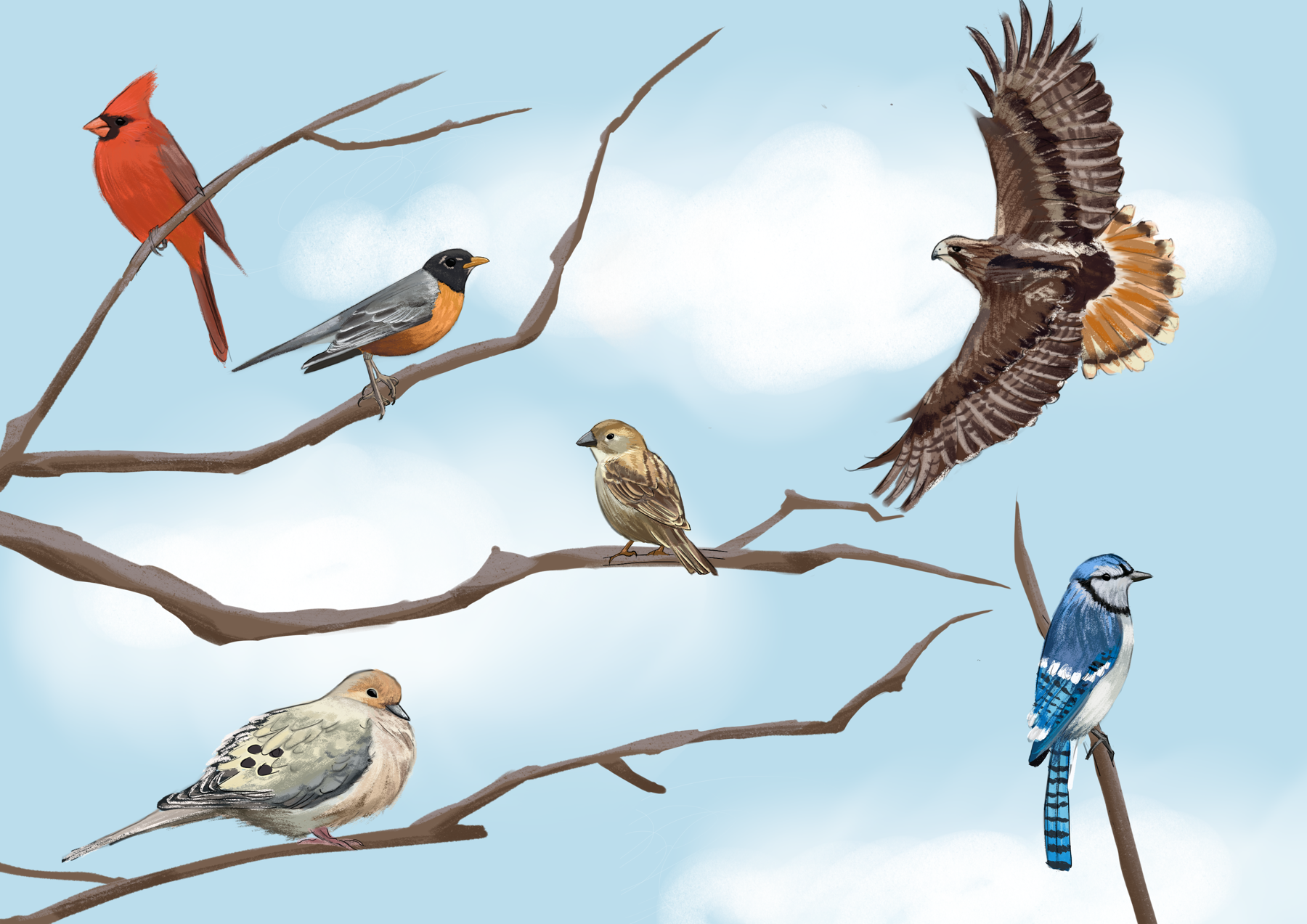
You do not need to adventure deep in the forest to experience the magic of birdwatching, for it is happening all around campus. Here at Wesleyan, there are countless species of birds to see if you take the time to notice them. Listed below are some of the most common types on campus:
American Robin
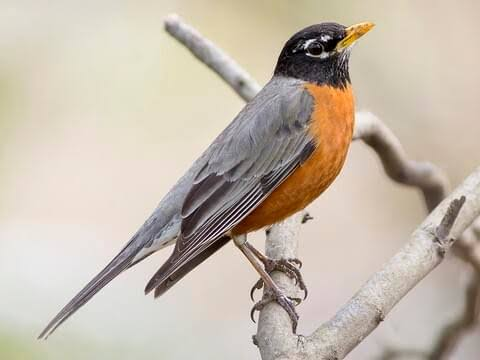
The American Robin can be seen year-round in the lawns of campus, where you will find them tugging earthworms from the ground. These birds also love berries from ornamental trees and shrubs. Look for flocks snacking on the fruiting dogwoods along Church Street during the winter months.
Identifiers: Head is black/grey with a yellow bill. Underparts vary, with males having a richer red chest and belly, while females are more salmon-colored. The wings are grey-brown with some black.
Birdsong: Described as cheerily, cheer up, cheer up, cheerily, cheer up.
House Sparrow
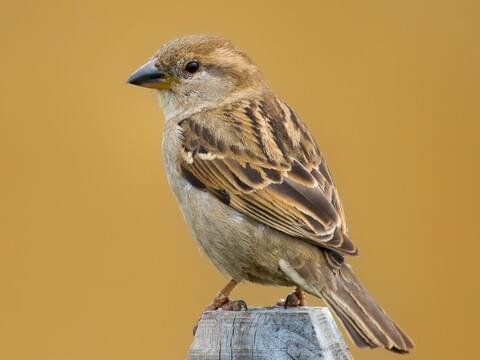
The House Sparrow is another year-round species on Wesleyan’s campus and can be found in most residential areas. This species is one of the most common birds and well-adapted to living alongside humans. House Sparrows are known to be a controversial species, as they are non-native, and their abundance often displaces native birds from nests. Look for this species searching for crumbs around Usdan and nesting along Lawn and Home Avenues.
Identification: Male House Sparrows have grey heads, white cheeks, a black bib, and a chestnut neck. Females are a plain light brown overall with grey-brown underparts.
Birdsong: A simple song of one or a series of cheep or chirrup notes.
Mourning Dove
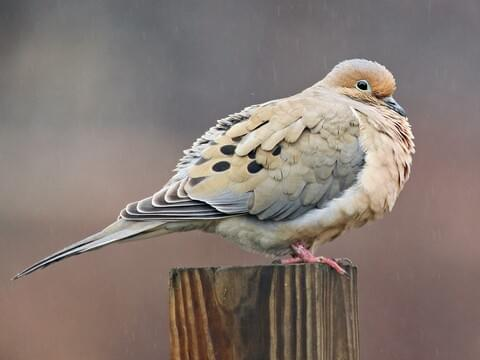
One of the most easily recognizable and abundant birds in domestic areas, Mourning Doves can be found perching on telephone wires or buildings. They are known to fly straight and fast and are able to adapt to most environments. Look for Mourning Doves resting on the telephone wires along High Street, Washington Street, and Long Lane.
Identifiers: Head and underparts are pale peach-colored. The back and wings are a darker grey-brown with black spots on the outer wings.
Birdsong: Described as a soft coo-oo followed by two or three louder coos.
Blue Jay
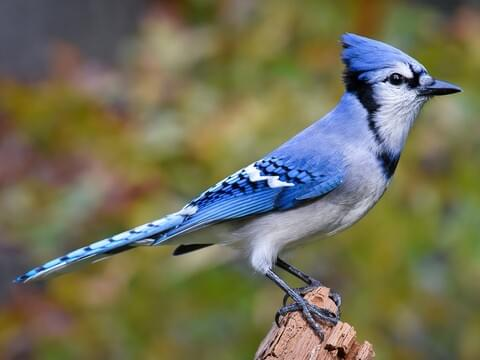
Blue Jays are known for their iconic blue color and their intelligence. Their love for acorns made them essential to spreading Great Oak trees after the last ice age. This bird can be found year-round on campus, so spot them as they soar over Andrus Field or navigate the trees near the Physical Plant.
Identifiers: Unmistakable royal blue above and white below, with a prominent crest and a black "necklace".
Birdsong: Blue Jays have a wide variety of calls, but most frequently you will hear them making a loud jeer-jeer.
Red Tailed Hawk
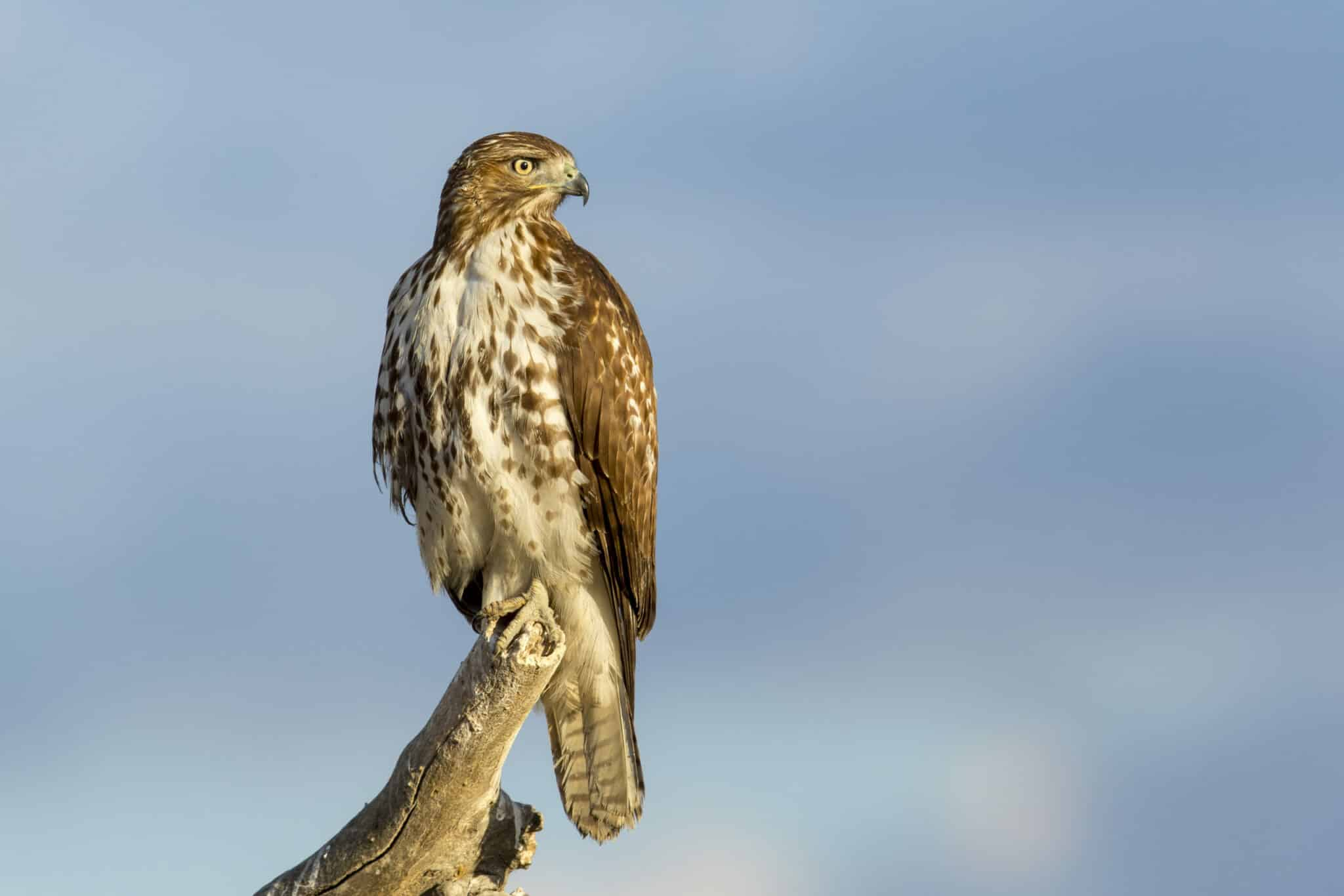
Red-tailed Hawks are one of the most common hawks in America. You will see them soaring through the sky in high circles or perched on top of tall telephone poles. These birds will hunt for small mammals in open fields. Spot the Red-tailed Hawk on campus near Butterfields and the tennis courts, where they have been known to nest in the high trees.
Identification: A large bird with a red tail. Mostly pale below, with a darker belly band and wing tips. The head is brown with a white throat.
Calls: An adult makes a harsh, screaming kee-eeeee-arr.
Northern Cardinal
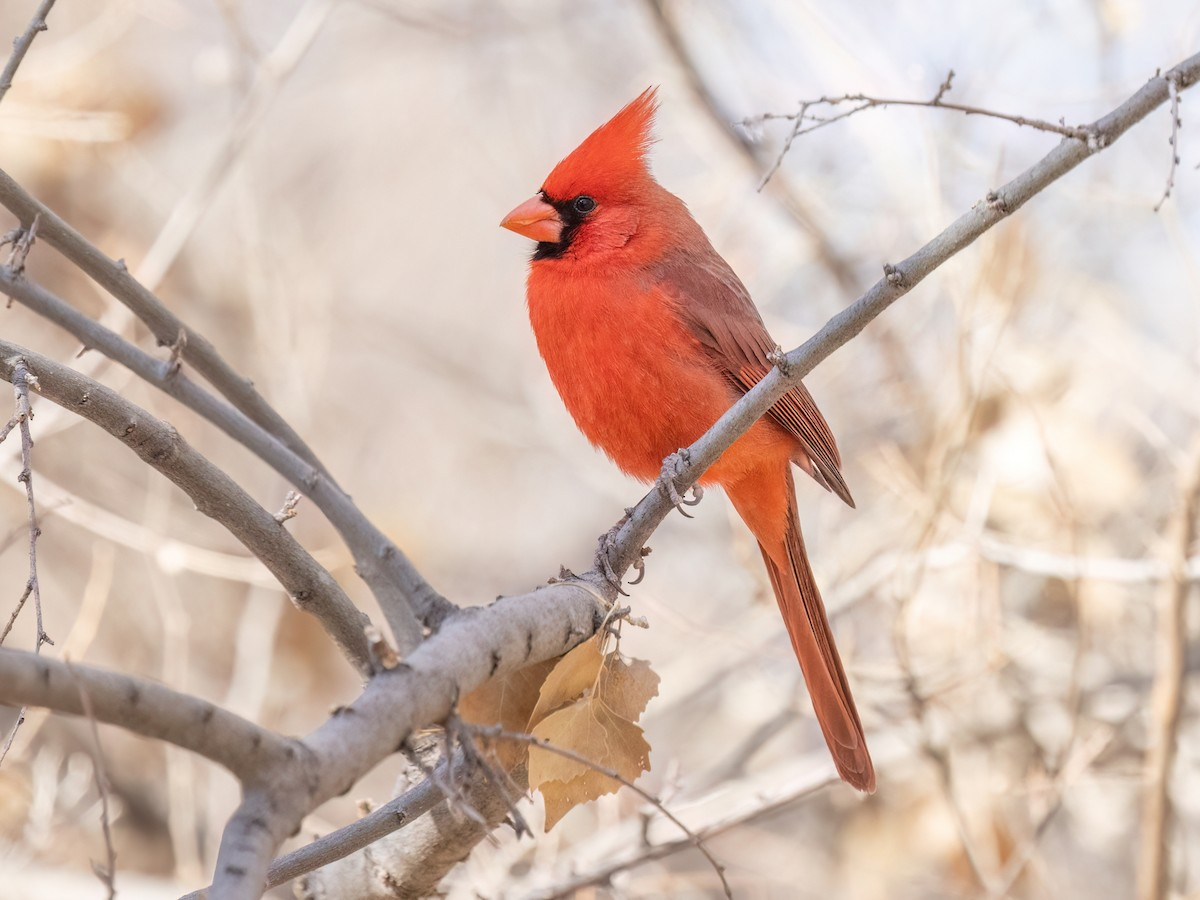
The legendary Northern Cardinal can be seen adorning sweatshirts, mugs, and flags across the Wesleyan campus. Aside from being the school mascot, the bird is one of the most recognizable species in North America and is known for its red crest. Its conical-shaped bill specialises in crushing seeds. Look for these flashes of red in the habitat near the Cross St athletic fields, further along Long Lane, or in yards on Pine Street.
Identification: Male Northern Cardinals are a brilliant red with a black mask and throat. Females are a pale brown overall, with a red tinge in the bill, tail, and outer wings.
Calls: The song is a loud string of clear whistling, often accompanied by a speed-up ending trill. Cheer, cheer, cheer … cue cue cue.
Now where do you begin? On your long journey from Fisk to Exley, look up and see if you can spot any of these birds. It could be the American Robin hopping across the lawns of North College or a Northern Cardinal perched on a nearby branch. Walking from Freeman to Summies? A Red-tailed Hawk may be circling overhead, while a House Sparrow rests quietly in the branches of a bush. These birds are all around our daily paths through campus, if only we take the time to notice them.
Birdwatching may seem intimidating, but there are excellent tools that can help you along the way. The Merlin Bird ID app, created by the Cornell Lab of Ornithology, is a wonderful source for all your birding needs. The app can identify bird calls, show you migration patterns, and other fun bird facts at the click of a button!
Birding does not need to be a long expedition to a nesting spot high in the mountains. It can happen on our daily walks to class, during a trip to the dining hall, or while lounging on Foss Hill. Through the hobby of birdwatching, you may see Wesleyan in a different light and notice how many other species call this campus home. There is magic happening in our own backyards every day. It is just a matter of learning how to look up and see it.
Happy birding!
Works Cited
“Connecticut.” Migration Dashboard, https://dashboard.birdcast.org/region/US-CT. Accessed 21 September 2026.
Dudeck, Blair. “Search.” All About Birds, https://www.allaboutbirds.org/guide/. Accessed 21 September 2026.
James, Oliver. A Field Guide to the Birds of Wesleyan. Wesleyan University Press, 2014.
Wetzel, Rosalie. “Birdwatching in America | U.S. Fish & Wildlife Service.” U.S. Fish and Wildlife Service, 9 December 2024, https://www.fws.gov/story/2024-12/birdwatching-america. Accessed 21 September 2026.