Can Quantum Physics Secure Our Votes?
With recent discourse surrounding election fraud, mail-in ballots, and voter security, safe elections are becoming essential to upholding democracy. Experimental quantum voting may offer a solution. Two teams of researchers recently conducted similar experiments on quantum voting protocols that can ensure secure and anonymous voting without the need for election administrators. While these experimental voting scenarios are still taking place on a small scale, current research and understanding of the subject could assist future applications.
What is Quantum Voting?
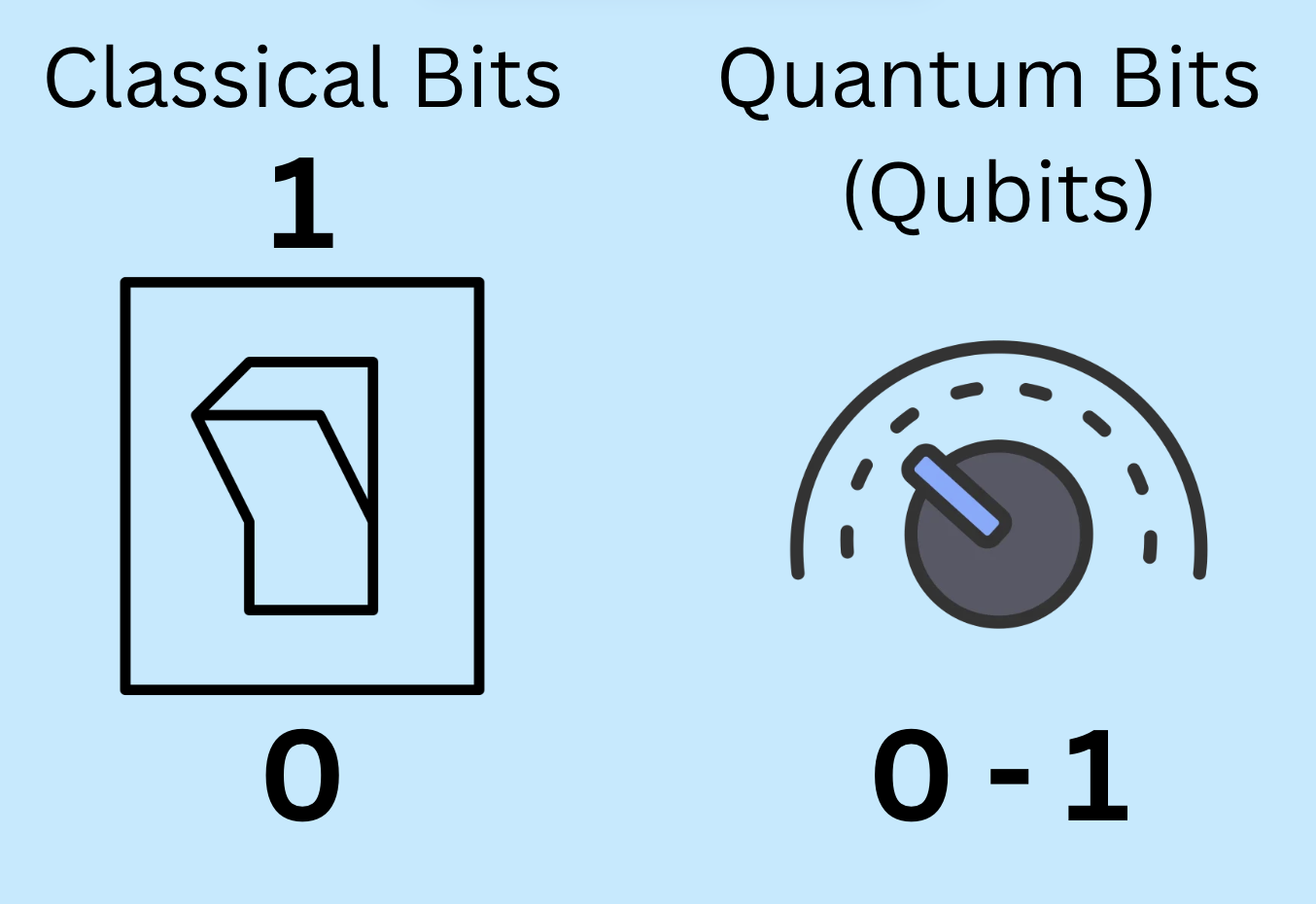
Quantum voting relies on many fundamentals of physics. Most importantly, understanding superposition and entanglement. In traditional computer science, a classical bit is the smallest unit of digital information in a computer, representing a single binary value of 0 or 1. A quantum bit (qubit), on the other hand, differs from a classical bit because it can exist in a combination of states rather than a single binary. It can be in a superposition of both states 0 and 1, meaning its quantum state is a combination of both. However, once measured, a qubit produces a definite valued outcome. For quantum voting, multiple qubits can link together and become entangled, hence creating correlations between their measured outcomes. Greenberger-Horne-Zeilinger (GHZ) states are one example of qubit entanglement and are described later in this article. The two studies examined in this review investigate how these theoretical principles can be applied to voter systems.
Classical Approaches
One classical approach to online voting is a protocol where each vote cannot be linked to voter identity. This includes assigning bit values (0 or 1) to corresponding voter options and having as many rounds of voting as there are voters. Imagine going to vote, and an anonymous system gives you a round to vote, where you will select your choice, either 0 or 1. When it is your turn to vote, you will select your number. When it is not your round, your bit will stay assigned to whatever original value you were given. This allows each vote to be recorded without any connection to one's identity. The only downside to this method is that it relies on the trustability of the system that distributes the assigned values. With the knowledge of these assignments, someone could determine voter identity, which defeats the purpose of safe, anonymous online voting. Therefore, while these classical approaches can work, it relies on a trusted mechanism to distribute information. Quantum voting, on the other hand, works to achieve anonymous voter security without a central authority.
Current Research
Quantum bits, mentioned earlier, create secure conditions for online voting. F. Joseph Marcellino et al.'s work demonstrates this through their research. In their study “Experimental Quantum Voting Using Photonic Greenberger-Horne-Zeilinger States,” scientists tested a quantum voting protocol in which no central authority needed to know how an individual voter voted. It involves creating multiple quantum-entangled qubits known as a Greenberger-Horne-Zeilinger (GHZ) state, with one qubit per voter. While there are various types of qubits, the qubits used in this study are made from particles of light, called photons. Their state is encoded in the direction the photons travel along a spatial pathway called a rail. Each of the four voters received one photon from the entangled state to vote. The advantage of this method is that if an individual voter’s measurement is intercepted, it looks random and produces either a 0 or 1. Despite this, the correlation between the entangled qubit particles guarantees that the combined measurements of the whole group encode the election results. Therefore, it generates an election decision without revealing individual votes, even to an election authority. Experimentally the scientists were able to generate “four-partite GHZ states with ≈ 89% fidelity and successfully recording voters’ intentions ≈ 87% of the time.” While Marcellino et al. demonstrate how this protocol can be experimentally effective, the study fails to cover how such privacy concerns would occur on larger-scale elections and voter parties.
Laurent-Puig et al. addresses this limitation through their study, “Experimental Quantum Electronic Voting,” by incorporating larger voter groups and new security protocols. As we know, elections do not consist of 4 voters choosing between two candidates. So, is it possible to expand this form of online voting to larger applicant and voter pools? Research from Nicolas Laurent-Puig et Al. certainly supports this approach. Their protocol, while very similar to Marcellino’s experiment, uses qubit entanglement but investigates if we can extend this idea towards practical voting systems. Their scenario includes 8 voters with up to 16 candidates and works to demonstrate scalability with quantum voting. While the team proves that the architecture of this voting can handle more voters and candidates, it does not mean that the desired privacy feature can operate at full efficiency, as the amount of quantum-entangled qubits grows.
Setbacks and Future Directions
These studies, while demonstrating the promising development of quantum-secure voting, are nowhere near ready for national elections. A real election requires hundreds of thousands of participants with multiple candidates. GHZ states are proven to be fragile, and as the number of entangled parties increases, the results become less secure. Overall, these experiments demonstrate a small-scale proof of quantum voting and still need further research before hitting a national scale.
“Experimental Quantum Voting Using Photonic Greenberger-Horne-Zeilinger States” by Marcellino et al. uses entangled photon qubits to demonstrate that four people can vote electronically while being anonymous and secure. “Experimental Quantum Electronic Voting” by Laurent-Puig et al. adopts similar techniques, yet works to expand the pool of candidates and voters to a larger scale. Together, these scientific papers demonstrate that quantum entanglement, and the use of qubits, has progressed past a theoretical framework, yet still are limited to experimental, lab settings. While this approach is still young in development, these studies pave the way to future application and highlight the importance of secure forms of voting in a digital age.
Work Cited:
Fadelli, I. (2026, September 9). Could quantum protocols make electronic voting more secure? Phys.org. https://phys.org/news/2026-09-quantum-protocols-electronic-voting.html
Laurent-Puig, N., Baroni, M., Centrone, F., & Diamanti, E. (2026). Experimental quantum electronic voting. Physical Review Letters, 137(6), 060803. https://doi.org/10.1103/scjl-5ygh
Marcellino, F. J., Wu, M., & Thew, R. (2026). Experimental quantum voting using photonic Greenberger-Horne-Zeilinger states. Physical Review Letters, 137(6), 060802. https://doi.org/10.1103/jlvb-t2xl